Why Explore the Hidden Forts and Coastal Batteries of Martinique?
Martinique is known for its lush rainforests, volcanic peaks, and postcard-perfect beaches. Yet behind the palm trees and turquoise bays hides a dense network of forts, batteries, and coastal defenses. These silent structures once controlled access to some of the most strategic harbors in the Caribbean. Today, they offer travelers a very different kind of island experience: a self-guided exploration of Martinique’s military heritage, panoramic viewpoints, and little-visited coves.
A self-guided tour of Martinique’s hidden forts and coastal batteries lets you go at your own pace. You can combine history with hiking, photography, or swimming. You can also escape the busiest resort areas while still staying close to major towns like Fort-de-France, Trois-Îlets, and Saint-Pierre. If you love independent travel, historic architecture, or off-the-beaten-path walks with sea views, these sites will likely become highlights of your trip.
Understanding Martinique’s Military Heritage
Martinique’s forts and coastal batteries are the result of centuries of rivalry between European powers. The island’s position at the crossroads of Caribbean trade routes made it a key prize in conflicts between France, Britain, and other colonial empires. To protect the sugar economy and control shipping lanes, engineers built stone forts, artillery batteries, and lookout posts on headlands, hills, and along narrow bays.
Many sites were expanded and modernized from the 17th to the 19th century. They reflect different phases of military architecture: from classic star-shaped bastions to later coastal gun platforms designed for more powerful artillery. Today, a large number are abandoned or only partially maintained. That is what makes them so intriguing. You are not simply visiting a polished museum; you are walking through atmospheric ruins that still dominate cliffs, river mouths, and peninsulas.
Key Forts and Coastal Batteries to Discover in Martinique
Some forts in Martinique, such as Fort Saint-Louis in Fort-de-France, are fairly well known. Others are overgrown, unsigned, or hidden behind villages and modern roads. Below are some of the most interesting sites for a self-guided exploration, mixing more accessible monuments with lesser-known coastal defenses.
Fort Saint-Louis, Fort-de-France
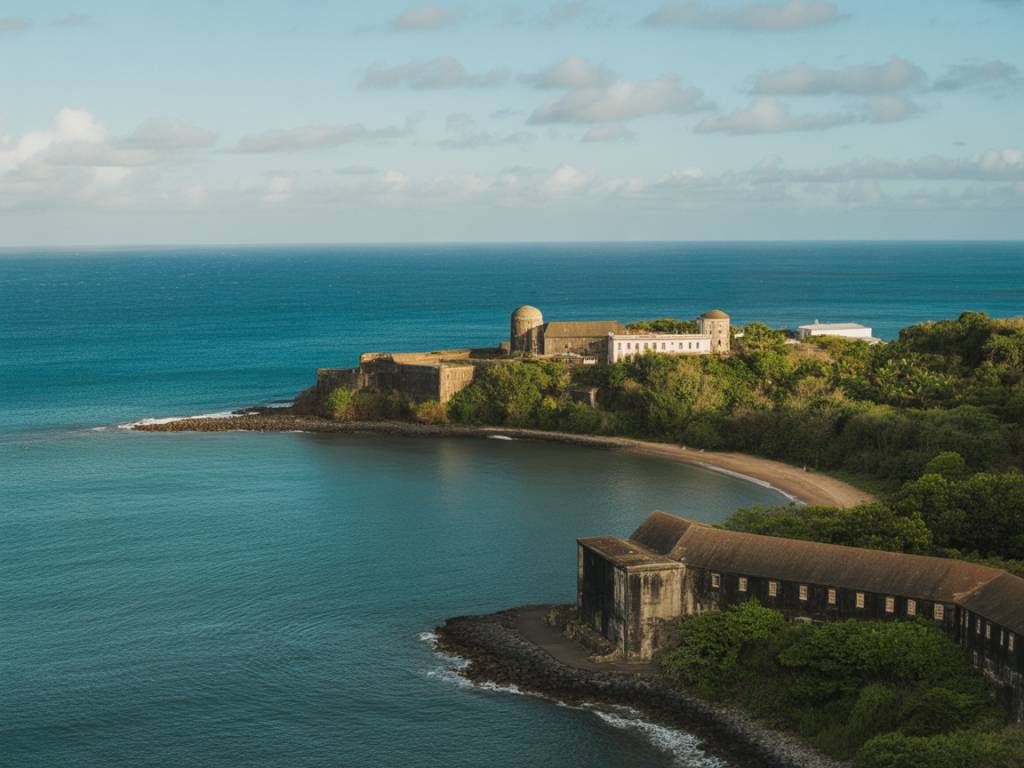
Fort Saint-Louis remains one of the island’s best-preserved and most visible forts. Perched on a rocky point in the heart of Fort-de-France Bay, it still functions partly as a naval installation. Visits are typically guided and must respect current access rules, but even a walk around the outside is rewarding on a self-guided tour.
From the surrounding waterfront you can appreciate:
- The angular bastions and thick ramparts typical of Vauban-inspired design.
- Views across Fort-de-France Bay toward the green hills and distant Pitons du Carbet.
- The contrast between old stone defenses and the modern city skyline.
Include Fort Saint-Louis early in your itinerary. It provides historical context for the smaller and more remote batteries you will discover later around the island.
Fort Tartenson and Fort Desaix: Overlooking the Capital
Above Fort-de-France, two additional hilltop positions complete the defensive ring: Fort Tartenson and Fort Desaix. Although access and conditions may vary, both forts illustrate how Martinique’s colonial engineers used elevation as a defensive advantage.
From nearby viewpoints and approach roads, travelers observe:
- How the forts command sweeping views over the bay, harbor, and road networks.
- The layered landscape of ridges and valleys that once shaped defensive planning.
- The strategic mix of sea-facing artillery and landward ramparts.
If your interest is photography, golden hour light can be spectacular around these upland positions, with Fort-de-France glowing below and the bay reflecting sunset colors.
Coastal Batteries of the Caravelle Peninsula
The Caravelle Peninsula on the Atlantic side of Martinique is a dream destination for hikers. It is also home to several lesser-known military structures and former strategic points. While the ruins here are more discreet than the main forts, they offer a powerful combination of scenery, history, and wilderness.
Along the hiking trails around the Caravelle lighthouse and the nature reserve you may encounter:
- Low stone platforms once used for small artillery pieces.
- Traces of walls and foundations hidden among coastal vegetation.
- Lookout points with unobstructed views over reefs, surf, and offshore islets.
The rugged coastline, mangroves, and wind-exposed cliffs show why these Atlantic approaches required surveillance. This area is ideal for travelers who want a self-guided exploration that blends nature and the island’s defensive history.
Battery Sites around Trois-Îlets and Anse d’Arlet
On the leeward Caribbean coast, the bays between Trois-Îlets and Anse d’Arlet once formed a defensive arc protecting the approaches to Fort-de-France. Several small batteries and fortified points controlled passes between islets and headlands. Many are now swallowed by vegetation or incorporated into modern neighborhoods, but traces still survive.
Explorers with a keen eye may spot:
- Remnants of stone walls or platforms on small promontories.
- Unusual flat terraces facing the sea, once used for cannons.
- Old staircases or paths leading from beach level up toward gun positions.
These coastal batteries are perfect for combining with snorkeling, casual walks, or a relaxed beach day. You can swim in calm bays, then wander a few minutes to discover how these same waters were once carefully monitored for enemy sails.
Ruins near Saint-Pierre and the Shadow of Mount Pelée
Saint-Pierre, the former “Little Paris of the Caribbean,” is famous for its tragic destruction by the eruption of Mount Pelée in 1902. Less known is that the area also hosted coastal batteries and defensive works guarding the routes along the northwestern shore. Today, the ruins of the town mix with traces of military infrastructure.
While walking through Saint-Pierre and its surroundings, you can observe:
- Fragments of stone structures along the waterfront and on low headlands.
- Old foundations blended into later construction.
- The dramatic backdrop of Mount Pelée, reminding visitors how natural forces ultimate overshadowed military strength.
This part of Martinique is especially atmospheric. Exploring the layered heritage of commerce, culture, catastrophe, and defense gives a deeper understanding of the island beyond its beaches.
Planning Your Self-Guided Forts and Batteries Itinerary
Designing a self-guided tour of Martinique’s hidden forts and coastal batteries is flexible. You can focus on one region, or circle the island slowly. The key is to balance travel distances, walking times, and your own interests in history, scenery, and photography.
A typical multi-day itinerary might include:
- Day 1 – Fort-de-France Bay: Fort Saint-Louis, surrounding waterfront, viewpoints toward Fort Tartenson and Fort Desaix.
- Day 2 – Southern Caribbean Coast: Bays around Trois-Îlets and Anse d’Arlet, coastal walks to small batteries and promontories.
- Day 3 – Caravelle Peninsula: Lighthouse hike, exploration of ruins and lookouts, combined with nature reserve trails.
- Day 4 – Saint-Pierre Region: Historic town, ruins, and any accessible coastal defense remains, plus time to explore volcanic heritage.
Allow time for detours, unexpected viewpoints, and local encounters. Many of the most memorable moments on a self-guided exploration come from unplanned stops and quiet stretches of coast.
Practical Tips for Visiting Forts and Coastal Batteries
Exploring hidden forts in Martinique is rewarding, but it demands common sense and basic preparation. Some sites are official attractions; others are neglected ruins or lie on the edge of private land. Respect, safety, and low-impact travel are essential.
Keep the following tips in mind:
- Check access conditions: Some forts remain under military control or have restricted areas. Always respect signs, fences, and local guidance.
- Wear proper footwear: Old stones, uneven paths, and sometimes slippery slopes mean sturdy walking shoes or hiking sandals are highly recommended.
- Bring sun and rain protection: A lightweight hat, high-SPF reef-safe sunscreen, and a compact rain jacket or poncho are useful in the tropical climate.
- Carry water and snacks: Many sites have no services nearby. A reusable water bottle and some energy-dense snacks will keep you comfortable.
- Use offline maps or GPS: Cellular coverage can be patchy in certain rural or coastal zones. Download offline maps before driving or hiking to less-known batteries.
- Avoid risky structures: Do not climb unstable walls, enter dark underground spaces, or stand on crumbling parapets just for a photo.
These basic precautions help ensure that your self-guided fort exploration remains enjoyable and safe, even far from crowds.
Responsible Travel and Recommended Gear for Fort Exploration
Martinique’s forts and coastal batteries are part of a fragile cultural landscape. Many are not actively preserved. Erosion, vegetation, and human impact gradually degrade them. As a visitor, your choices can help protect these sites for future travelers.
Adopt a low-impact approach:
- Stay on existing paths whenever possible to reduce erosion.
- Do not remove stones, bricks, or artifacts, even small ones.
- Refrain from graffiti or carving names on walls.
- Pack out all trash, including food wrappers and plastic bottles.
A few thoughtfully chosen items can also enhance your experience:
- Daypack: A small, ventilated backpack to carry water, camera, and a lightweight first-aid kit.
- Travel binoculars: Essential for spotting distant ruins, watching ships in the bay, or observing sea birds near cliff-top batteries.
- Photography gear: A compact camera or smartphone with a wide-angle setting works well for ramparts and panoramic seascapes. Consider a protective case for humidity and spray.
- Guidebook or digital notes: Having a concise historical reference helps you interpret what you see on site.
With the right gear and a responsible mindset, your self-guided exploration becomes both enriching and sustainable.
Is a Self-Guided Fort Tour in Martinique Right for You?
Exploring the hidden forts and coastal batteries of Martinique appeals to a specific type of traveler. It is ideal if you appreciate history but do not need constant interpretation panels. It suits those who enjoy walking, discovering quiet spots, and imagining past events from fragmented remains and sweeping views.
If you prefer fully curated tours with regular facilities and clear signage, you might focus more on Fort Saint-Louis and a handful of well-known monuments. However, if the idea of tracing old cannon lines along a remote headland excites you, or if you enjoy combining culture with coastal hikes, a self-guided itinerary can add a unique dimension to your Caribbean island stay.
Martinique offers much more than beaches. Its hidden forts and coastal batteries tell a story of power, conflict, and adaptation to the sea. With curiosity, preparation, and respect for the sites, you can uncover a rich military heritage while experiencing some of the island’s most striking viewpoints and least crowded shores.