The first time you spot a sea urchin in Martinique, you may mistake it for a dark little sea creature tucked into the reef. Then you notice the spines. Long, short, fine, thick, black or almost purple: they can look like underwater fireworks, and they deserve admiration from a respectful distance.
Sea urchins are part of the island’s lively coastal world, from shallow rocky pools to coral reefs and seagrass beds. Some graze on algae, some hide in crevices, and one has long been appreciated as a local delicacy. Knowing which kinds you might encounter—and how to avoid an unpleasant meeting—makes a swim or snorkel much more relaxing. Your feet, in particular, will thank you.
What is a sea urchin?
A sea urchin is a marine invertebrate belonging to the echinoderm family, alongside starfish and sea cucumbers. Its rounded body is covered in a hard shell called a test, with movable spines used for protection and movement. Many species also have tiny tube feet that help them grip surfaces and handle food.
Underwater, an urchin can seem almost motionless. Look more closely, though, and it may be edging along a rock or grazing algae with its mouth, which sits on the underside of its body. The famous “teeth” are part of a remarkably efficient feeding structure. It is a rather well-equipped little gardener.
That gardening matters. By eating algae, sea urchins help shape reef communities and keep certain plants from taking over. Their role is delicate: too few grazers can allow algae to spread, while too many can put pressure on the reef. Like so much of marine life, they are part of a balance rather than a decorative extra.
Sea urchins you may see in Martinique
The Caribbean is home to several sea urchin species, and the exact mix varies with depth, habitat and local conditions. A quick glance is not always enough to identify one confidently. Still, a few familiar types are worth knowing before you slip into the water.
The long-spined sea urchin
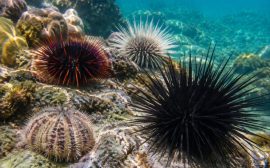
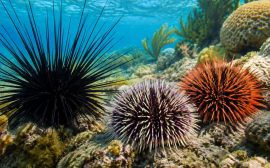
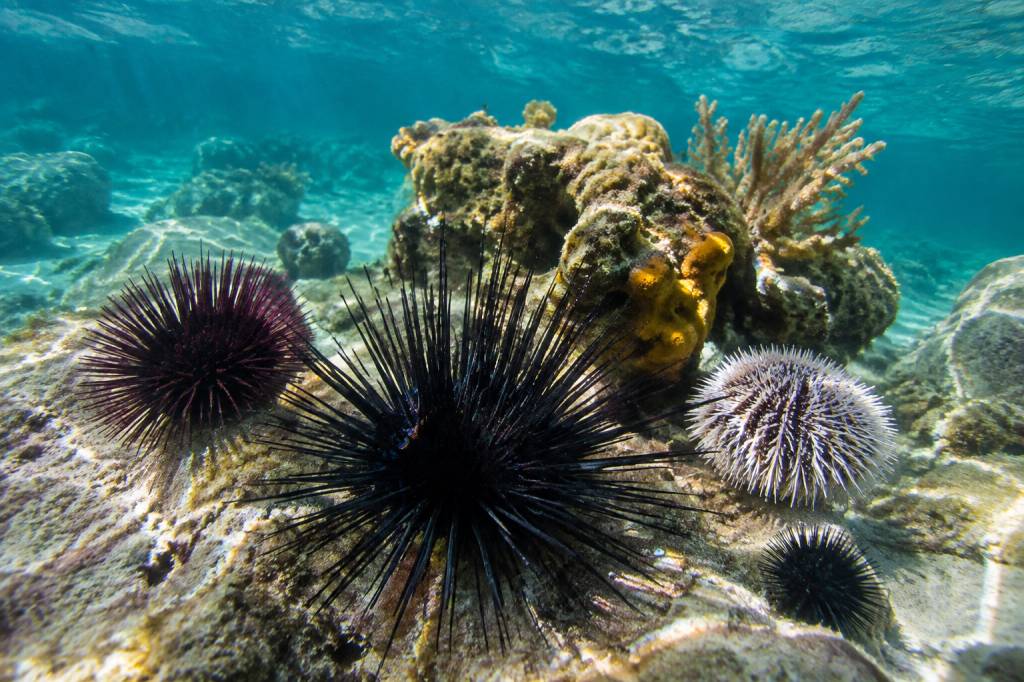
The long-spined sea urchin, Diadema antillarum, is one of the easiest to recognize. Its dark body is surrounded by very long, fine spines, often black or deep purple. Against a patch of coral or a rocky ledge, it can look like a tiny sea creature wearing a dramatic, spiky sunburst.
It commonly shelters in reef crevices and rocky areas, especially where there is plenty of algae to graze. Although it may look intimidating, it is not hunting swimmers. The danger comes from accidental contact: its delicate spines can break in the skin, causing pain and irritation.
This species suffered a major die-off across the Caribbean in the early 1980s, with serious consequences for reefs. Populations have recovered in some places, but their numbers can still vary considerably. If you spot one, enjoy the view without touching it—and resist the urge to “make room” by nudging it. The reef has been managing its own furniture for a very long time.
The rock-boring sea urchin
The rock-boring sea urchin, Echinometra lucunter, is often found in shallow, wave-washed places: rocky shores, reef flats and small pools left by the tide. It is usually smaller and more compact than a long-spined urchin, with shorter, sturdy spines that can range from dark to reddish or purplish shades.
Its name comes from its habit of wearing into small hollows in rock. These snug retreats provide shelter from waves and predators. They also make the urchin surprisingly easy to overlook. A dark shape at the bottom of a pool might appear harmless until you put a hand down beside it.
When exploring a rocky shore, watch where you place your feet and hands. A pair of sturdy water shoes can help protect your soles, but they are not an invitation to walk across coral or shuffle blindly through a pool.
The white sea urchin
The white sea urchin, Tripneustes ventricosus, is also known as the West Indian sea egg. Its round body is often pale, cream or greenish, with short spines that may be marked with darker tips. It is more likely to be seen in seagrass beds and shallow sandy areas than wedged into a narrow rocky crack.
In parts of the Caribbean, this species has traditionally been harvested for its edible roe. That does not mean every urchin you see is safe or legal to collect. Local rules, seasonal protections and conservation measures can apply, and populations need careful management. If you are curious about tasting sea urchin, ask a reputable local restaurant or guide rather than collecting one yourself.
Other species and look-alikes
Martinique’s waters contain other urchins, including species such as the variegated sea urchin, Lytechinus variegatus. Colour and appearance can change with age, habitat and lighting, so even a keen snorkeller may not identify every animal on sight.
There are also spiny marine animals that can be confused with sea urchins at a quick glance. The best rule is wonderfully simple: if you do not know what it is, do not touch it. A camera zoom is safer than an enthusiastic fingertip.
Where to look for sea urchins
Sea urchins live in several types of coastal habitat around Martinique. You might find them in shallow rocky pools, along reef edges, among coral rubble, or in seagrass beds. They tend to favour places with shelter and food, so a careful look around rocks and crevices can reveal them.
Popular swimming and snorkelling areas around the island offer different underwater landscapes, but conditions change with weather, waves and visibility. A calm, clear morning may reveal details that disappear in stirred-up water later in the day. Ask a local guide about current conditions, and never leave a safe swimming area to get a closer look at an animal.
When you snorkel, keep your fins up and your movements slow. Kicking the bottom can damage fragile coral, cloud the water and send both you and the reef into a rather unnecessary flurry. Floating calmly gives you a better view—and gives marine life a chance to carry on with its day.
Are sea urchins dangerous?
Most sea urchins are not aggressive and do not chase or attack people. Problems usually happen when someone steps on one, braces a hand against a rock where it is hiding, or tries to pick it up. The spines can puncture skin and may break off, leaving small fragments behind.
Some urchins also have tiny jaw-like structures called pedicellariae. Depending on the species, these can pinch or irritate. A sting or puncture may cause sharp pain, redness, swelling or tenderness. The severity depends on the species, how many spines are involved, where the injury is and the person’s reaction.
A puncture in the foot is unpleasant; a puncture near a joint, in the face, or in a sensitive area deserves extra attention. Seek medical help promptly if pain is severe, swelling increases, the wound looks infected, a spine is deeply embedded, or you have symptoms such as dizziness, difficulty breathing or a widespread rash.
How to avoid a prickly encounter
-
Wear well-fitting water shoes when walking over rocky shallows, but still watch every step.
-
Never touch, pick up or try to move a sea urchin, even if it appears inactive.
-
Avoid placing your hands into crevices or under ledges where animals may be hiding.
-
Use a mask and snorkel to look before entering unfamiliar water.
-
Keep a comfortable distance from the bottom, coral and rocky surfaces while swimming.
-
Follow local advice, signs and protected-area rules, and do not collect marine life.
These small habits make a big difference. They protect you, and they also help preserve the reef. A sea urchin is not a souvenir, and a coral head is not a step stool—two useful reminders for any tropical swim.
What to do if you are pricked
If a spine punctures your skin, leave the water and rinse the area with clean water. Do not rub the wound or dig around with a needle or blade: broken spines can be fragile, and trying to remove them roughly may push fragments deeper or damage the tissue.
For pain, warm water may help. Soak the affected area in comfortably hot water—never hot enough to burn—for around 30 to 90 minutes if practical. A clinician or pharmacist can advise on suitable pain relief and whether the wound needs further treatment. Do not rely on folk remedies or assume that every fragment will work its way out harmlessly.
Get medical advice if a spine is deeply embedded, pain persists, the injury is near a joint or eye, or signs of infection appear. A healthcare professional can assess the wound and decide whether removal, cleaning or other care is needed. If you feel unwell or have a serious allergic reaction, seek urgent help.
Enjoy the reef without disturbing it
Sea urchins are easy to label as hazards because of their spines, but they are also part of what makes Martinique’s underwater landscapes so fascinating. Their shapes, colours and tucked-away habits reward patient observation. Watch a long-spined urchin silhouette itself against the reef, or spot a small rock-borer in its carefully worn hollow, and the shoreline begins to feel like a whole other world.
So bring your mask, move gently and keep your hands to yourself. The best encounter is often the one where you see an urchin clearly, admire its improbable spiky outfit, and leave it exactly where it belongs. You get a lovely story for later; it gets to continue its quiet work beneath the Caribbean sun.