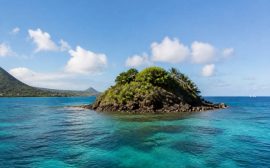
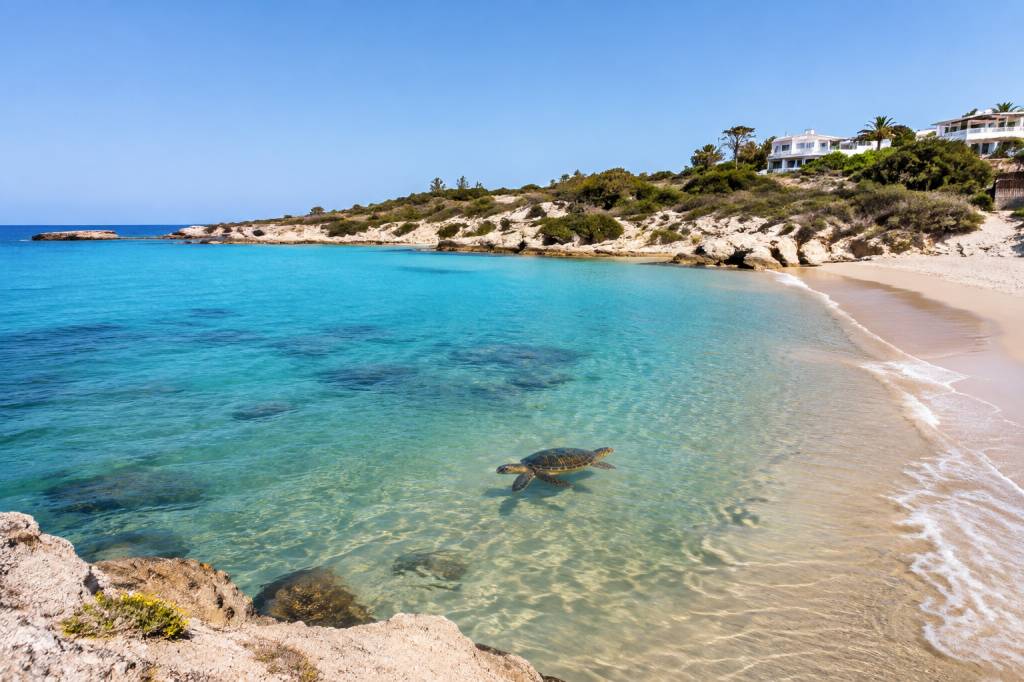
The first thing you notice at Turtle Bay is the hush. The Mediterranean rolls onto the shore, the sand warms beneath your feet, and the only urgent decision seems to be whether to swim now or after one more minute in the shade. Then you remember why this stretch of coast matters: sea turtles come here to lay their eggs. Suddenly, every footprint feels worth placing carefully.
On Cyprus, “Turtle Bay” usually refers to Alagadi Beach, on the northern coast near Kyrenia (Girne). It is a protected nesting area rather than a fully serviced resort beach, so a little planning makes all the difference. Here’s how to enjoy its beaches, find a comfortable place to stay, and explore the area without disturbing its most famous visitors.
Where is Turtle Bay in Cyprus?
Alagadi Beach lies east of Kyrenia, along the coast of Northern Cyprus. The name is often used for a pair of connected sandy coves, sometimes called Alagadi 1 and Alagadi 2. Together, they form one of the island’s best-known nesting sites for loggerhead and green turtles.
It is important to distinguish this beach from other places around Cyprus that are also associated with turtles. Lara Beach, on the Akamas Peninsula in the west, is another major nesting area. If your map sends you toward Paphos, you are probably heading for Lara, not Alagadi. Check your route before setting off; Cyprus is small enough for a day trip, but not small enough for a wrong turn to feel like a quick detour.
Alagadi is reached by road from Kyrenia, and having a hire car is the easiest option. Public transport may get you part of the way, but services and schedules can be limited, especially outside busy periods. Bring water, sun protection and anything else you rely on: facilities at the beach are basic, and that simplicity is part of its appeal.
What to expect at Alagadi Beach
Expect a natural shoreline rather than a polished beach club. The coves are known for soft sand, open views and a more untamed feel than the busy resort strips. The water can be wonderfully clear on calm days, with blue-green shallows that make it tempting to wade in before you have even found a place for your bag.
Conditions change with the weather, and the sea is not always as still as it looks from the car park. Check the water before swimming, pay attention to local guidance, and keep children close. There may be no lifeguard or the kind of facilities you would find at a managed resort beach.
There is also a practical difference between Alagadi and a beach where you can rent a sun lounger, order lunch and wander back to your hotel for a forgotten book. Come prepared, take your rubbish away, and leave the beach as you found it. A turtle nesting site is a home, not a giant outdoor lounge room.
When to visit for beaches and turtles
For a relaxed beach day, spring and early autumn can offer warm weather and fewer visitors than the peak summer weeks. Summer brings long, bright days, but also stronger heat. Aim for early morning or later afternoon if you want a gentler walk and a less intense sun.
Turtle activity follows a seasonal rhythm. Nesting generally takes place during the warmer months, and hatchlings emerge later in the season. Exact dates vary from year to year, so check with local conservation groups or visitor information before planning around a turtle event. Do not assume that a visit at night guarantees a sighting; the animals are wild, and their schedule does not consult a holiday itinerary.
If you are lucky enough to see a turtle, watch quietly from a distance and follow the instructions of conservation staff. Do not touch, chase, photograph with a flash, or block an animal’s route to the sea. A few seconds of restraint are a small price for letting a remarkable natural moment unfold undisturbed.
How to visit responsibly
Alagadi’s importance to turtles means that ordinary beach habits need a little adjustment. Bright lights, noise and careless movement can interfere with nesting females and hatchlings. The best visitor is often the one who leaves the smallest trace.
- Follow signs, barriers and instructions from authorised conservation teams.
- Keep lights low or switched off at night, and never use a flash near turtles.
- Do not touch nests, eggs, hatchlings or adult turtles.
- Keep dogs under control and away from marked nesting areas.
- Take all rubbish with you, including cigarette ends and food packaging.
- Stay on established paths and avoid driving onto the sand.
- Do not dig or move sand in areas where nests may be present.
Guided turtle experiences may be available in season through local conservation organisations. These visits can be a thoughtful way to learn about nesting and hatchling protection, provided they are run by authorised groups. Book ahead, confirm the latest arrangements, and be wary of anyone promising a guaranteed close-up encounter. Wildlife is not a stage act, however persuasive the sales pitch.
Where to stay near Turtle Bay
Kyrenia is the most convenient base for combining Alagadi with restaurants, shops and other sights. The town has a range of accommodation, from small guesthouses to larger hotels, and its harbour makes an atmospheric place to unwind after a day in the sun. In the evening, the old stone buildings catch the last light while dinner stretches into the sort of slow, happy affair that makes you forget to check the time.
For a quieter stay, look at villages and accommodation east of Kyrenia. This can bring you closer to the beach and give you a more local feel, though you will likely need a car for meals and day trips. Check exactly how far a property is from the coast: “near the beach” can mean a short stroll or a drive that seems longer after a full day outdoors.
Before booking, check whether your accommodation includes air conditioning, parking and breakfast, and whether restaurants are within walking distance. In the hotter months, air conditioning is less a luxury than a very persuasive travel companion. If turtle season is central to your plans, ask your host about current access rules rather than relying on old online listings.
Things to do beyond the sand
Make time for Kyrenia, known locally as Girne. Its harbour is lined with cafés and restaurants, while the castle overlooks the waterfront and houses the Shipwreck Museum. The exhibits offer a fascinating glimpse into ancient seafaring, and the stone walls provide welcome shade when the afternoon sun starts behaving like it owns the place.
Bellapais Abbey, in the hills above the town, is another worthwhile stop. Its Gothic arches and peaceful setting feel a world away from the coast. Go in the morning or late afternoon for softer light, and leave time to wander the surrounding lanes rather than treating the abbey as a quick photo stop.
For a change of scenery, drive into the foothills of the Kyrenia Mountains. Small villages, viewpoints and winding roads make an appealing counterpoint to the beach. Keep your route flexible: a roadside café or a view across the coast may turn out to be the highlight you did not know to look for.
Food is part of the pleasure of travelling here. Look for grilled fish, meze, fresh salads and local cheeses, and ask what is in season. Meze is best approached with curiosity and a little restraint at the beginning: the small plates have a habit of multiplying, and suddenly the main course looks like an ambitious suggestion.
Practical tips for a smooth visit
Carry more drinking water than you think you need, especially in summer. Pack a hat, reef-conscious sun protection, sturdy sandals for rough patches, and a bag for your rubbish. Shade can be limited, so bringing a beach umbrella may be useful if local conditions and rules allow it.
Check the weather and sea conditions before you leave, and confirm road directions using an up-to-date map. Mobile coverage can vary, so downloading your route in advance is sensible. If you are crossing between the south and north of Cyprus, check current crossing requirements and rental-car insurance arrangements before your trip; policies can differ between providers.
It is also wise to confirm whether the beach is open and what access rules apply on the day you plan to visit. Conservation work, weather or seasonal restrictions can change what visitors are permitted to do. A quick check can save you a long drive and help protect the nesting grounds.
A beach day with a little more meaning
Turtle Bay is not the place to measure a holiday by the number of cafés, sunbeds or water sports on offer. Its charm lies in the open coast, the quiet coves and the knowledge that this landscape matters far beyond the afternoon you spend there. Swim when conditions are right, explore the nearby town, and give the shoreline the space it needs.
By the time you leave, you may have sand in your shoes and salt in your hair, but you will also carry a small reminder to travel gently. At Alagadi, the best souvenir is not a shell collected from the beach. It is the feeling of having shared a special place without leaving it worse for the next visitor—or the next turtle.